
Join our newsletter for downsizing tips, local events, and resources, sent once a month. No spam, ever.
Thank you! Your submission has been received!
Oops! Something went wrong while submitting the form.



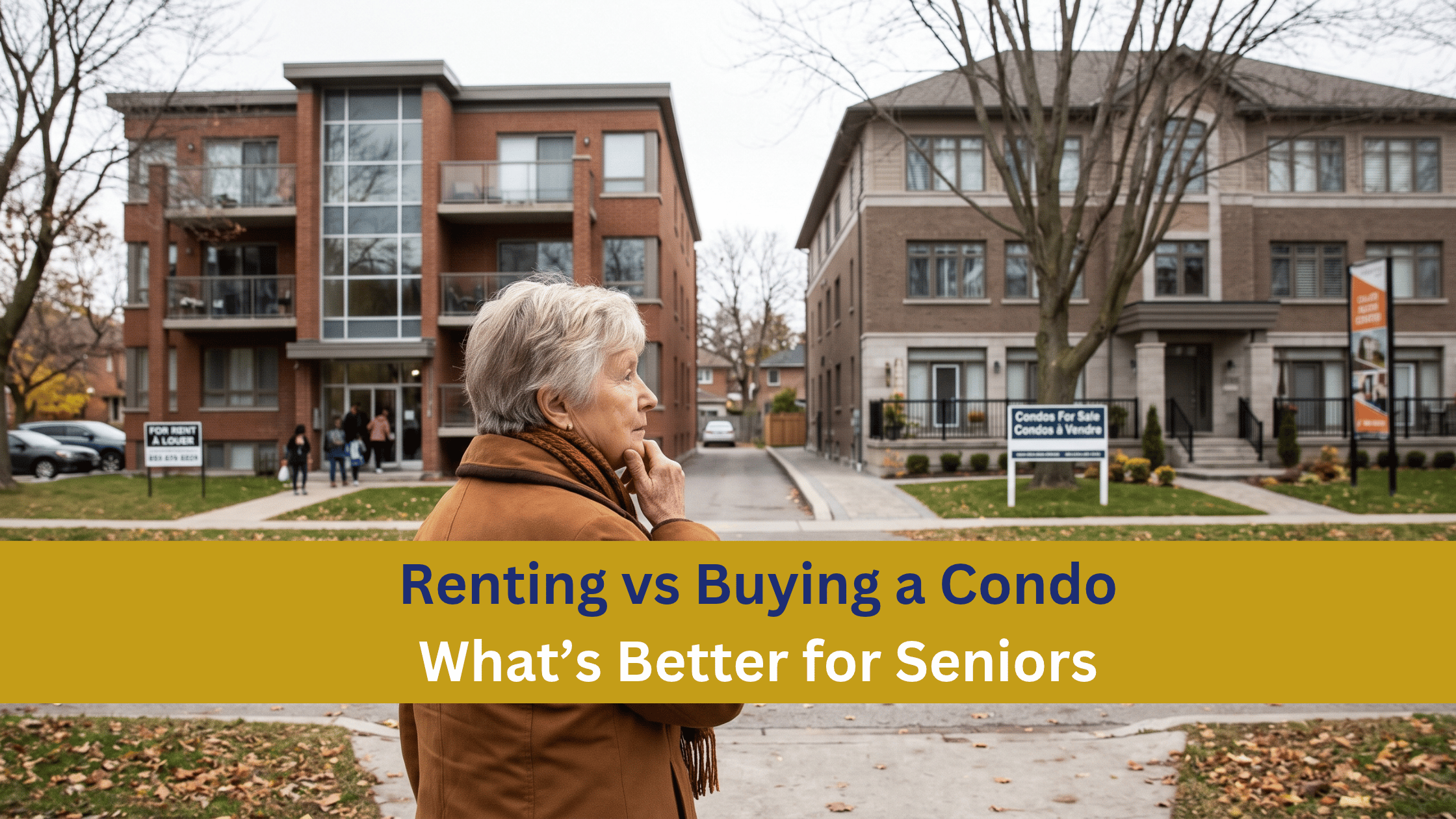
She's decided it's time to sell her longtime family home. But what comes next? Should she rent or buy a condo?
Meet Carol, a 72-year-old widow who has lived in her Mississauga home for nearly 35 years. The house is becoming too much to maintain, and she's ready for something smaller.
She's met with her financial planner and has a good understanding of what her home is worth, how much she can comfortably spend each month, and how to make her savings last throughout retirement.
But she's struggling with one decision: Should she buy another home or rent?
Like many seniors, Carol has always owned her home. Renting feels unfamiliar, perhaps even like a step backward. She's also concerned about losing control over where she lives.
Yet renting has some appealing advantages, including fewer maintenance responsibilities and the opportunity to invest the money from her home sale.
Carol situation is common among older adults considering downsizing in Mississauga, Oakville, Burlington and surrounding communities.
So, how do you decide?
Buying a condo: When you purchase a condo, you're putting some of your money back into real estate. You benefit if the property appreciates, and you may have lower monthly expenses if you purchase without a mortgage.
However, ownership comes with ongoing expenses, including property taxes, condo maintenance fees, insurance, utilities and repairs. Condo fees can increase, and unexpected special assessments can create substantial additional costs.
There's also the opportunity cost of tying up a significant portion of your savings in another property.
Renting a condo: Renting typically requires much less money upfront. Instead of purchasing another property, you can invest the proceeds from your home sale to help generate retirement income.
Your monthly expenses may also be easier to anticipate because you're generally not responsible for major repairs, property taxes or condo maintenance fees directly.
However, rent increases over time, and investment returns aren't guaranteed.
What matters most: Don't simply compare monthly rent with condo fees. Work with your financial planner to evaluate your total housing costs, investment income, taxes and long-term financial security under both scenarios.
Buying a condo: Compared with a detached house, condo ownership eliminates many responsibilities such as lawn maintenance, snow removal and exterior upkeep.
However, you're still responsible for maintaining your unit and dealing with issues involving appliances, plumbing, renovations and other repairs.
As an owner, you're also financially responsible for your share of major building expenses through condo fees and possible special assessments.
Renting a condo: One of the biggest advantages of renting is having fewer maintenance responsibilities.
When something breaks through normal wear and tear, it's generally your landlord's responsibility to arrange and pay for repairs. You can spend less time managing your home and more time enjoying retirement.
What matters most: If you're rightsizing because you want less responsibility, renting may offer an additional level of freedom beyond what condo ownership provides.
For many seniors, this is the biggest emotional obstacle.
Homeownership often represents success, independence and security. In some cultures, owning property is especially important, and renting can carry an unfair stigma.
But renting doesn't mean giving up your independence.
Buying a condo: Ownership gives you greater control over your home. You can renovate, decorate and make changes, subject to condominium rules. You also don't have a landlord who might decide to sell your unit.
Renting a condo: Renting offers flexibility, but some decisions require your landlord's approval. You generally can't make significant renovations, and you'll need to follow the building's rules.
A common concern is being forced to move because the landlord wants to sell.
In Ontario, selling a rental property doesn't automatically end a tenancy. However, a qualifying purchaser who intends to occupy the unit may be able to seek termination through the legal process.
This is where purpose-built rental buildings can offer an advantage.
Unlike an individually owned condo, a professionally managed rental building is designed to accommodate long-term tenants. Corporate landlords cannot evict tenants under Ontario's landlord's-own-use provision, although other lawful grounds for eviction still exist.
What matters most: If stability is your priority, consider a purpose-built rental building rather than a condo owned by an individual investor.
Buying a condo: Purchasing another property keeps a portion of your wealth invested in real estate. You may benefit from future appreciation and leave the property to your heirs.
The trade-off is that much of your wealth remains tied up in an asset that isn't easily converted into spending money.
Renting a condo: Selling your home and renting allows you to unlock more of your equity.
That money could support travel, hobbies, family experiences, gifts to children or grandchildren, or simply provide a stronger financial cushion.
For some seniors, the goal is no longer to accumulate more wealth. It's to enjoy the wealth they've already built.
What matters most: Consider whether you want more of your money invested in property or available to support your retirement lifestyle.
Buying a condo: Ownership provides housing stability without the risk of a landlord ending your tenancy. However, you still face rising maintenance fees, property taxes and potential building expenses.
Renting a condo: Renting can provide long-term stability, particularly in professionally managed rental buildings.
Ontario has tenant protections, but it's important to understand that not all rental properties have the same rent controls.
Generally, buildings first occupied for residential purposes after November 15, 2018, are exempt from Ontario's annual rent increase guideline. This means rent increases can be significantly higher, even when the landlord is a corporation.
Before signing a lease, investigate the building's ownership, rent-control status and history of rent increases.
What matters most: A stable rental arrangement involves more than a good landlord. Understanding your legal protections and future costs is essential.

Purpose-built rental apartments, including seniors-focused communities, may offer professional property management, shared amenities and a more predictable rental experience.
Examples worth exploring include:
There isn't one right answer.
Buying may be preferable if you value ownership, want greater control over your living space and feel comfortable having more money invested in real estate.
Renting may be more attractive if you want fewer responsibilities, greater financial flexibility and the freedom to use your home equity differently.
And sometimes, renting for a year or two can be a useful transition. It allows you to experience a neighbourhood or lifestyle before deciding whether to purchase.
At Seamless Rightsizing, we encourage seniors to explore both options before making their decision.
Our role isn't simply to help you sell your current home. It's to help you understand your options and find a living arrangement that supports your finances, lifestyle and future needs.
The goal isn't necessarily to own your next home. It's to find the home that helps you enjoy the next chapter of your life.
Considering downsizing in Mississauga, Oakville, Burlington or surrounding communities? Get in touch with us and we can talk through options, offer suggestions and take you for a tour.