


Join our newsletter for downsizing tips, local events, and resources, sent once a month. No spam, ever.
Thank you! Your submission has been received!
Oops! Something went wrong while submitting the form.



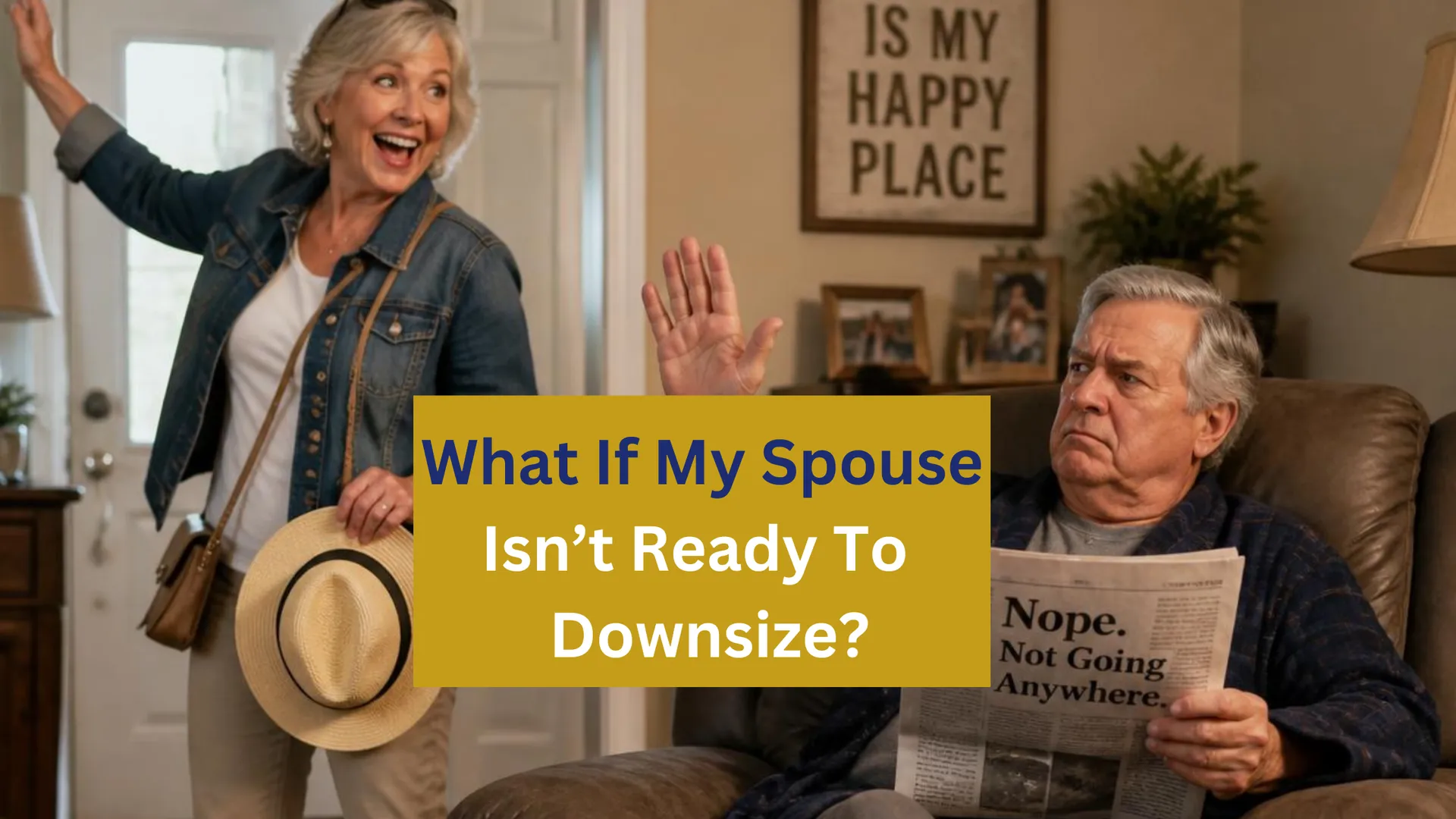
Every now and then, I meet someone who quietly says, “I’m ready… but my spouse isn’t.”
You can usually hear the frustration in their voice.
They have started imagining the next chapter. Maybe they’re tired of the stairs, the repairs, the unused rooms, or the never-ending list of things that need doing. Maybe they’re ready for something simpler, safer, and easier to manage.
But their beloved partner is still holding tightly to the current home.
And that can be incredibly hard.
Because when one spouse is ready to move forward and the other is not, it’s rarely just a real estate decision. It becomes emotional. Personal. Sometimes even painful.
One person may feel held back. The other may feel pushed out.
So what do you do when you can clearly see the benefits of rightsizing, but your spouse simply isn’t there yet?
It starts with understanding what they may really be feeling.
When someone resists the idea of moving, it can be easy to hear it as stubbornness.
But often, “I’m not ready” doesn’t mean “I will never move.”
It may mean:
“I’m scared.”
“I’m overwhelmed.”
“I don’t want to lose control.”
“I don’t know who I’ll be if we leave this place.”
“I need more time to imagine something different.”
Change is hard at any stage of life. But moving later in life can feel especially loaded because it touches memories, identity, finances, routines, independence, and the unknown.
For the spouse who is ready, the house may feel like a burden.
For the spouse who is not ready, the house may still feel like proof of a life well built.
Both can be true.
Before trying to convince your spouse to move, it helps to gently ask: what are they actually holding on to?
It may not be the house itself.
They may be holding on to the garden they planted, the kitchen where the kids did homework, the garage full of tools, the dining room where holidays happened, or the neighbourhood where they know every shortcut.
Sometimes the home represents a version of themselves they are not ready to let go of.
For someone who spent decades caring for a family, maintaining a home, hosting gatherings, or building a life from the ground up, leaving that home can feel like closing a book they are still emotionally reading.
Even if the next chapter could be wonderful, they may still need time to grieve the chapter they are leaving.
For many people, especially seniors, the home is not just where they live. It is a symbol of independence.
So when one spouse says, “We should move,” the other may hear something very different:
“You can’t handle this anymore.”
“You’re getting old.”
“You’re losing control.”
“Your opinion doesn’t matter.”
That may not be what you mean at all. You may be thinking about safety, comfort, freedom, lower maintenance, or being closer to family. But if your spouse hears criticism or pressure, the conversation can quickly become defensive.
That’s why the way you talk about rightsizing matters.
Instead of, “This house is too much for us,” try:
“I wonder if there’s a home that would make life feel easier for both of us.”
Instead of, “We can’t keep doing this,” try:
“I’d love for us to have more energy for the things we actually enjoy.”
Instead of, “You need to be realistic,” try:
“I want us to make this decision while we still have choices.”
The goal is not to win the argument. The goal is to stay connected while you explore the future together.
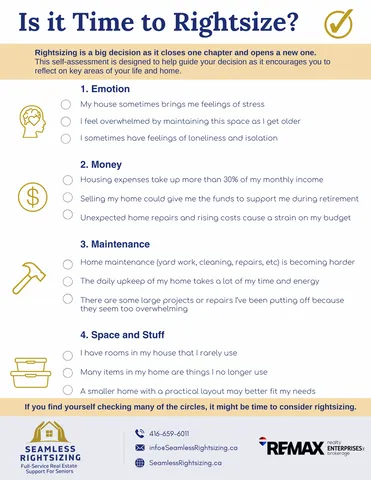
Get your copy of our 1-page "Is it Time to Rightsize" self-assessment.
It's intended to help you or your reluctant spouse recognize whether you're comfortable where you are...or whether it's time to explore options.
One of the biggest mistakes couples make is beginning with the property.
Should we sell?
What’s the house worth?
Where would we go?
What would we do with everything?
Those questions matter, but they can feel overwhelming very quickly.
Instead, start with the life you both want. Ask questions like:
“What do we want our days to feel like over the next few years?”
“What parts of this house still bring us joy?”
“What parts of this house create stress?”
“What would we do with more time and less maintenance?”
“What would make life feel easier, safer, or more enjoyable?”
This shifts the conversation from “Are we selling the house?” to “What kind of life are we trying to create?”
That is a much softer place to begin as it focuses on your life together.
If you are the spouse who feels ready, your feelings matter too.
You may be tired. You may be worried about stairs, winter maintenance, rising costs, or a future health issue forcing a rushed decision. You may feel lonely in a neighbourhood that has changed. You may simply feel ready for something lighter.
But your spouse is more likely to hear you if you speak from your own experience rather than focusing on what they are doing wrong.
Try using “I” statements:
“I’m starting to feel anxious about how much work the house needs.”
“I notice I don’t enjoy the home the way I used to.”
“I feel tired thinking about another winter here.”
“I would feel more at peace if we explored our options before we had to make a rushed decision.”
This is very different from:
“You never want to talk about this.”
“You’re being unreasonable.”
“You’re just attached to stuff.”
“You don’t understand how hard this is for me.”
Even if those thoughts come from real frustration, they can make your spouse dig in deeper.
When someone feels judged, they protect themselves. When someone feels heard, they may slowly become more open.
Sometimes the word “move” feels too final. So don’t start there.
Start with exploration.
You might say, “We don’t have to decide anything right now. Could we just look at what our options might be?”
That could mean touring a condo building, visiting a retirement community, looking at accessible bungalows, talking to a financial planner, or making a list of what each of you would need in a future home.
Exploring is not the same as committing.
In fact, exploration can reduce fear because it replaces vague anxiety with real information.
Your spouse may be imagining a future that feels small, lonely, or limiting. But once they see actual options, they may realize the next home is not about giving everything up. It may be about gaining ease, safety, community, and freedom.
One of the fears behind rightsizing is the fear of losing memories.
But memories are not stored in square footage.
They live in the stories, photographs, traditions, furniture pieces, recipes, keepsakes, and relationships that move with you.
A helpful question is:
“What would make a new place feel like home?”
Maybe it’s a favourite chair by a sunny window. A wall of family photos. A smaller dining table that still hosts Sunday dinners. A few meaningful pieces from the garden. The piano. The artwork. The holiday dishes. The familiar morning routine.
This helps your spouse see that moving does not mean erasing the past.
It means choosing what matters most and bringing it forward.
It is rare for both spouses to arrive at the same decision on the same day.
One person often begins emotionally preparing months, or even years, before the other. By the time they finally say it out loud, they may already be halfway ready.
But the other spouse may be hearing it seriously for the first time.
That gap can create tension.
So be patient. Not passive, but patient.
You can keep the conversation alive without turning it into a daily debate. Bring it up gently. Leave room for silence. Revisit it after a home repair, a difficult winter, a health scare, or a visit to friends who have already rightsized.
Sometimes people need repeated, low-pressure conversations before they can imagine change.
When couples feel stuck, it can help to have someone neutral guide the conversation.
Not someone who comes in to “convince” your spouse.
Someone who can listen to both of you, answer questions, explain the process, and help break the decision into smaller pieces.
Often, resistance softens when the move stops feeling like one giant overwhelming event and starts feeling like a series of manageable steps.
At Seamless Rightsizing, we often meet people when they are still in the “just thinking about it” stage.
There is no pressure to move before you are ready. The goal is to understand your goals, fears, options, and timeline—so you can make a thoughtful decision together.
A home is important.
But your relationship is more important.
The way you move through this conversation matters. You want to arrive at the next chapter with your partnership intact, not bruised from months of arguing.
So lead with kindness. Stay curious. Listen for the fear underneath the resistance. Share your own concerns honestly, but gently. Keep reminding each other that you are on the same team.
You are not trying to drag your spouse into your version of the future.
You are trying to create a future that supports both of you.
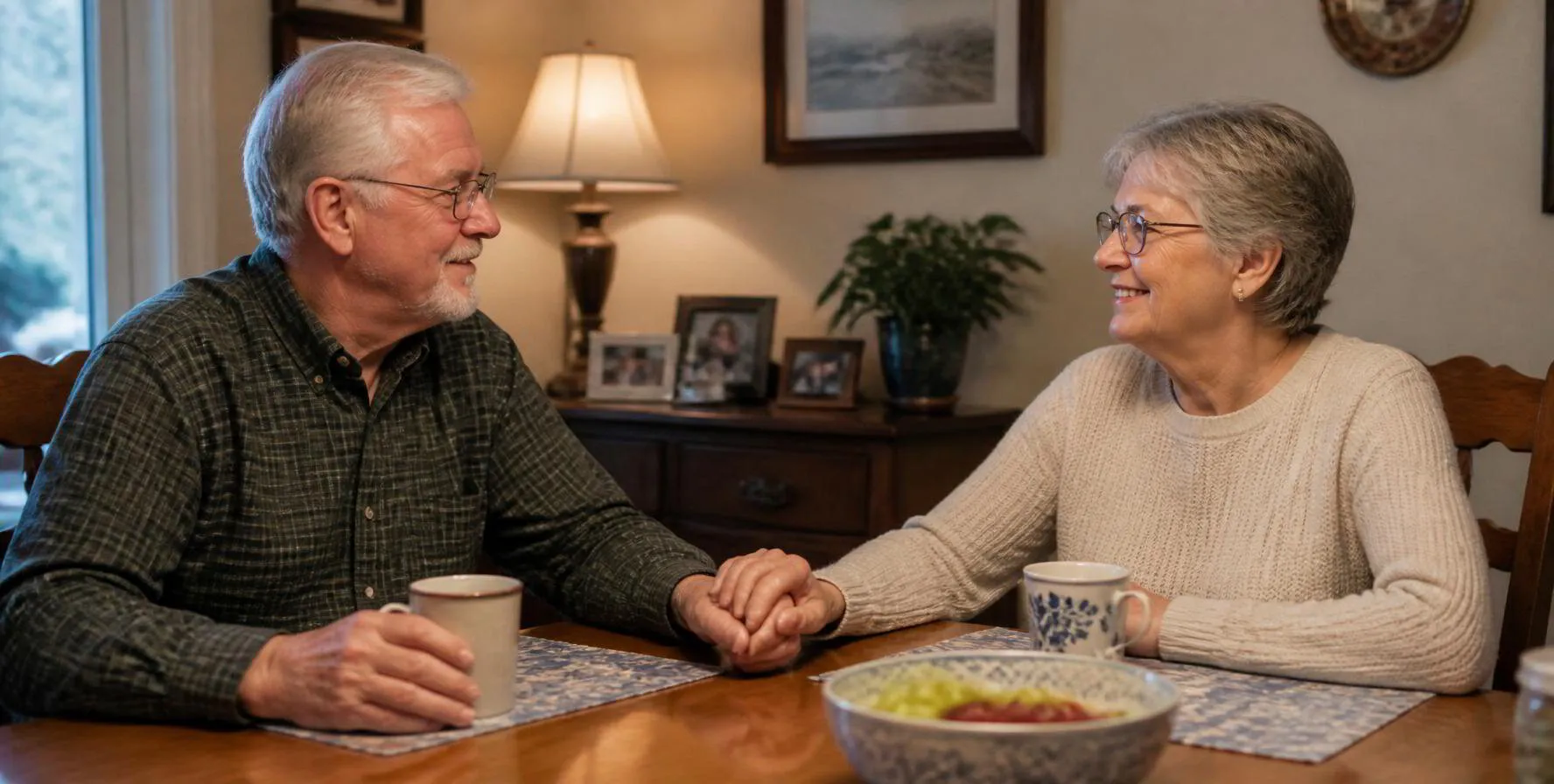
If your spouse is not ready, it does not mean the conversation is over.
It means the conversation needs care.
Start small. Ask better questions. Explore options. Talk about what matters. Focus on the life you both want, not just the house you may eventually leave.
Because rightsizing is not about forcing someone out of a beloved home.
It is about helping both of you move toward a life that feels safer, simpler, more manageable, and more aligned with who you are today.
And sometimes, the spouse who is clinging to the old book simply needs time to believe that the next chapter can still be beautiful.
If you’d like guidance on navigating this situation, we’re here to help.
Get in touch at info@SeamlessRightsizing.ca or call 416-659-6011 for a free, no-pressure consultation.