



Join our newsletter for downsizing tips, local events, and resources, sent once a month. No spam, ever.
Thank you! Your submission has been received!
Oops! Something went wrong while submitting the form.



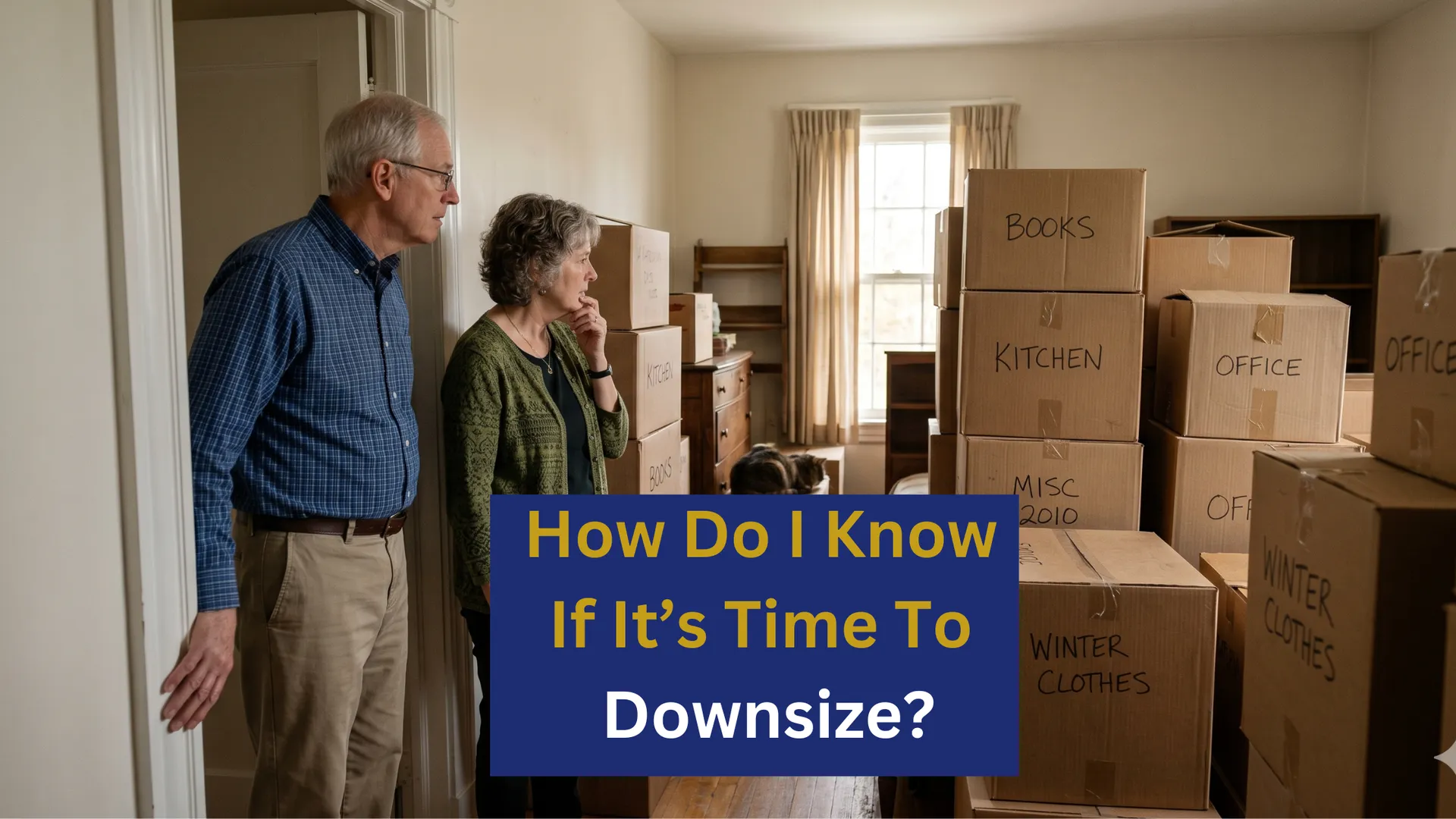
For many seniors and their families, this is one of the most common—and most emotional—questions we hear:
“How do I know when it’s time?”
The truth is, there’s rarely one single moment that makes the decision clear.
Instead, it’s often a series of small signs that begin to add up over time. How many of these do you recognize?
This blog will help you recognize those signs, reflect on your situation, and understand what your next step could look like.
One of the most important distinctions we share with families is this:
There’s a big difference between moving by choice and moving by circumstance.
When you choose to rightsize:
This is where we see the most positive outcomes—when clients feel empowered, prepared, and confident about their next chapter.
On the other hand, moving by circumstance is often driven by something unexpected:
In these situations, the move becomes reactive.
It can feel:
Important details can be missed, options may feel limited, and there’s often less control over both the process and the outcome.
We’ve worked with many families in both situations—and without question, planning ahead leads to a smoother, more positive experience.
Rightsizing by choice isn’t about rushing into a decision. It’s about giving yourself the gift of time, clarity, and control—so when you do move, it feels right.
What Does “Rightsizing” Really Mean?
Before we dive into the signs, let’s reframe the idea.
Rightsizing isn’t about giving something up—it’s about choosing the right home that better supports your current lifestyle.
For many people, the family home was once the perfect fit. But over time, needs change. What once felt comfortable and full of life can start to feel overwhelming, expensive, or even isolating.
Downsizing implies smaller. RIghtsizing means better:
And ultimately, a better quality of life.
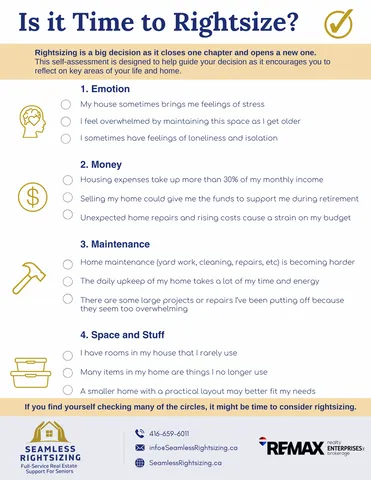
Get your copy of our 1-page "Is it Time to Rightsize" self-assessment.
It's intended to help you or your reluctant spouse recognize whether you're comfortable where you are...or whether it's time to explore options.
Here are more details about the signs. As you read through, notice which ones seem most familiar to you.
One of the first indicators is often emotional—and it’s not always easy to put into words.
You may notice:
For some, the change is tied to life events—like the loss of a spouse or children moving out. As one client shared after 45 years in her home, “It was no longer my home—it became just a house.”
These feelings matter. Your home should support your well-being—not add to your stress.
Another important factor is financial.
Ask yourself:
Many homeowners find that expenses like property taxes, utilities, and maintenance quietly increase over time. In fact, if housing costs are taking up more than 30% of your income, it may be worth reassessing your situation.
Rightsizing can free up resources—allowing you to focus on experiences, travel, family, or simply peace of mind.
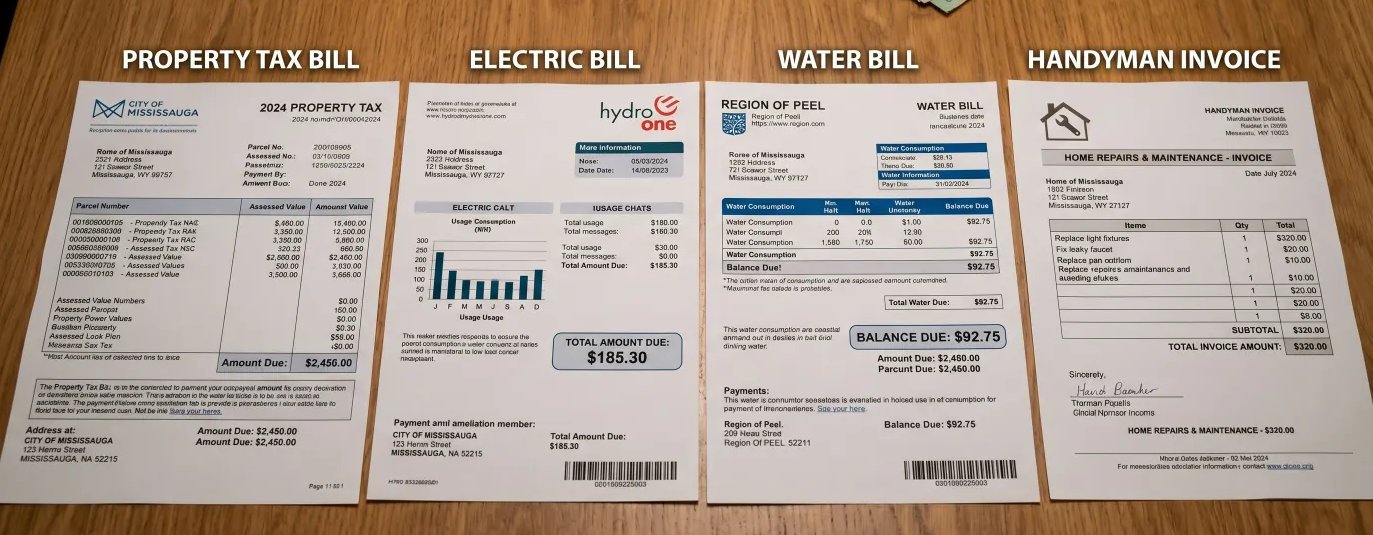
A home requires ongoing care—and over time, that responsibility can become physically and mentally exhausting.
You might notice:
This is one of the most common signs we see.
What was once manageable can slowly become a burden. And often, people wait until something breaks—or becomes urgent—before taking action.
Planning ahead allows you to make decisions calmly, rather than reactively.
Many families come to us with the same realization:
“We’re only using part of our home.”
You may have:
This isn’t just about space—it’s about mental load.
Decades of belongings can feel heavy, especially when you don’t know where to start. That’s why one of the key steps in our process is helping clients gently sort through their items—deciding what to keep, donate, or pass on with care.
A smaller, well-designed space can often feel more freeing than limiting.
Sometimes, the signs are more practical—but just as important.
Consider:
Safety concerns don’t have to mean something is wrong today—but they can signal what might become challenging in the future.
Rightsizing gives you the opportunity to choose a home that supports both your current and future needs, rather than waiting for a health event to force a quick decision.
One of the most powerful indicators is simply this:
You’ve started thinking about it.
Maybe it’s a quiet thought:
These thoughts are worth paying attention to.
In many cases, families tell us they wish they had started the conversation earlier—before a crisis or urgent situation made the decision feel rushed.
Exploring your options early gives you:
Often, adult children begin to notice signs before a parent fully acknowledges them.
They may see:
These conversations can feel delicate—but they come from a place of care.
At Seamless Rightsizing, we encourage families to approach this together, with empathy and open communication. This is not about pressure—it’s about support and shared decision-making.
If you’re unsure where you stand, a simple self-assessment can help.
Reflect on your emotional well-being, finances, maintenance responsibilities, and how you’re using your space. If you find yourself agreeing with several of these points, it may be time to explore your options more seriously.
If you’d like guidance on understanding your options—we’re here to help.
Get in touch at info@SeamlessRightsizing.ca or call 416-659-6011 for a free, no-pressure consultation.