


Join our newsletter for downsizing tips, local events, and resources, sent once a month. No spam, ever.
Thank you! Your submission has been received!
Oops! Something went wrong while submitting the form.



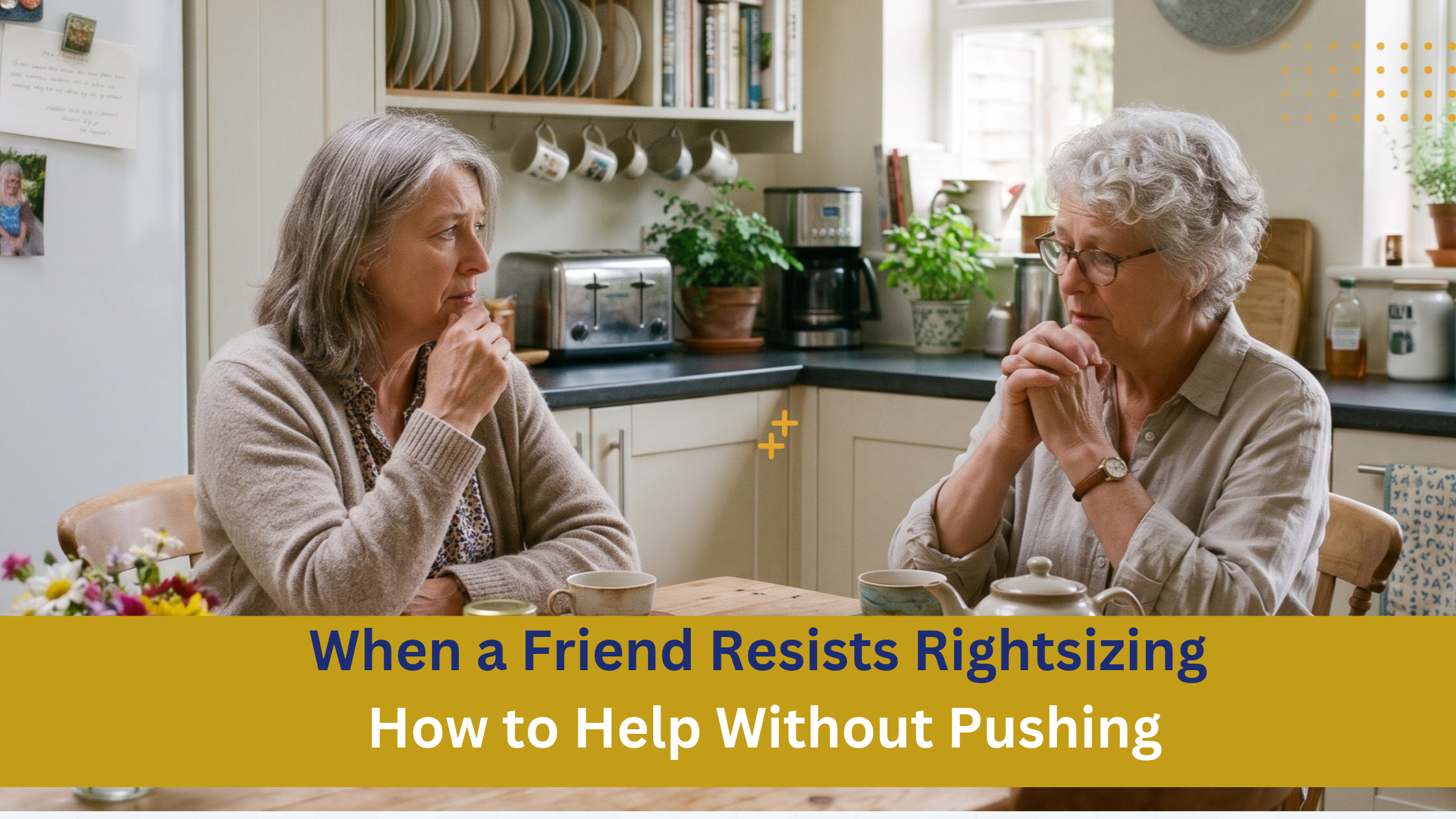
Every Tuesday, Margaret and Joan meet for coffee. Lately, Joan has been talking about the work her house requires. The garden is becoming a burden, repairs keep appearing, and she sometimes wishes she lived closer to friends.
But when Margaret suggests that Joan consider moving to a more manageable place, Joan’s answer is firm.
“I can’t imagine leaving. Where would I go? And what would I do with everything?”
The thought of choosing a new home overwhelms her. Sorting decades of belongings fills her with dread. Margaret has gently offered to help, but Joan has refused every time.
Margaret sees possibilities: fewer chores, easier surroundings, more time together.
Joan sees a series of difficult decisions, with no clear place to begin.
Helping a friend across that gap takes patience—and a conversation that reaches beyond the contents of their cupboards.
A home can represent independence, familiarity, and belonging. Your friend knows the neighbours, the shops, and exactly where the afternoon sun falls. Leaving may feel like giving up a life they worked hard to build.
They may also associate moving with getting older or losing control. Even a thoughtful suggestion can sound like a judgement about their ability to manage.
Practical concerns matter, too. Would another home actually be affordable? Would there be space for visitors, a pet, or a favourite hobby? Would moving bring them closer to people or leave them feeling isolated?
Then there are the belongings. Your friend may struggle to picture a move because every room seems to contain another exhausting job. In fact, it can feel so overwhelming that they refuse to even start because it seems pointless.
Resistance can hold several concerns at once. Before offering solutions, find out which one feels largest.
Downsizing means a smaller home. Rightsizing means finding a home that fits someone’s needs, preferences, and daily life. That might be a smaller house, an accessible apartment, or a community with services. It could also mean adapting the current home and arranging support.
Start with how your friend wants to live.
“What would you like to spend less time worrying about?”
“What do you most want to keep about living here?”
“If you ever considered another home, what would it need to offer?”
These questions make room for their priorities. Perhaps Joan wants a garden she can enjoy without maintaining it, a spare bedroom, and friends nearby. Those wishes provide something concrete to explore.
A smaller property alone may solve very little if it takes away what your friend values most.
When someone has repeatedly refused assistance, another “I’m happy to help” may feel like renewed pressure.
Margaret could begin differently:
“I think I’ve made this sound simpler than it feels to you. There’s choosing somewhere, working out the costs, and deciding what to do with your things. I can understand why it feels overwhelming.”
Then pause.
If Joan wants to continue, Margaret might ask: “Which part would you most like an answer to?”
Listen without immediately correcting fears or promising that everything will work out. Some concerns will need research. Others may simply need to be heard.
If your friend does not want to discuss it, give the subject some space. Keep enjoying the friendship without making every visit a conversation about moving.

Your friend may fear that agreeing to one conversation starts a process they cannot stop.
Make it clear that looking at possibilities carries no commitment. They can gather information, dislike what they find, and keep considering their choices.
Offer one specific activity:
Ask before arranging visits or contacting anyone on their behalf. Let your friend choose the next step.
When exploring feels voluntary and manageable, it may become easier to imagine a change.
Decluttering deserves attention, but it does not have to become the first hurdle your friend must clear.
They can explore housing before deciding what happens to every possession. Seeing a suitable home may even help them understand what they would want to bring.
If they do welcome practical help, make the offer precise: “Would you like company for ten minutes while you look at one shelf?”
Let them choose the task. Leave emotionally difficult belongings for another time. Never discard, donate, or promise items to someone else without permission.
You can also help identify possessions that support the life they want: the chair they read in, tools for a hobby, or a table for family meals. This gives the conversation a positive focus.
Honour the agreed stopping time, even if little gets done. Trust matters more than the number of bags filled.
Offer one resource at a time, matched to what your friend is worried about. Ask whether they would like to read it themselves or look through it together.
For exploring what would fit their life: The Government of Canada’s Thinking About Aging in Place guide offers questions about housing, changing needs, and support. It can help your friend consider both making their current home more manageable and exploring somewhere new.
For understanding what help is available: The Seamless Rightsizing vendor partners page explains the types of professionals who can assist, including organisers, movers, financial planners, and retirement community contacts. Seeing the support available may help your friend realise they would not have to manage every detail themselves.
For understanding the feelings behind resistance: Seamless Rightsizing’s article “What if My Spouse Isn’t Ready to Downsize?” explores attachment to home, fear of losing control, and ways to approach the conversation gently. Although written for couples, its suggestions about listening and exploring without committing can also help when supporting a friend.
You might introduce a resource by saying, “This made me think of some of the questions you mentioned. Would you like me to send it?” Then let your friend decide when—or whether—to explore it.
Margaret may not persuade Joan to move. She can help her understand the possibilities and feel less alone with the decisions.
Progress might be identifying what matters, asking one question, or accepting a little help. Your friend may eventually move, arrange support at home, or take more time.
The most helpful invitation is often simple: “You’re in charge. If you want to explore one small part together, I’m here.”